脳の働きの仕組み
親が自分の子供をかわいがり、大事に育てたいと思う気持ち。これは単なる感情ではなく、人間に備わった神経生物学的な仕組みに支えられている。
子供の顔を見たり、笑顔に接したりすると、脳の神経回路が反応する。そこには、養育行動への動機づけに関わるドーパミンや、親子の愛着形成に関わるオキシトシンなどが関係する。
子供が喜ぶ姿を見ると自分もうれしくなり、子供が苦しむ姿を見ると自分もつらくなる。
子供を守り、育てたいという気持ちは、こうした脳の働きによって支えられている。
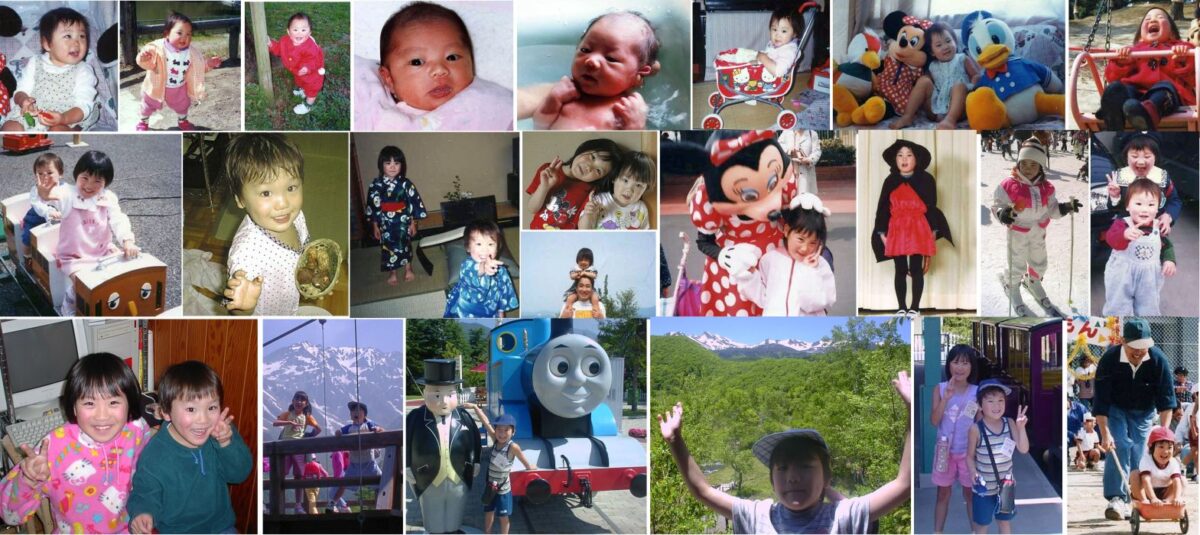
さらに興味深いのは、親になる経験そのものが脳の働きを変化させること。親子の愛情は遺伝的な血縁関係だけで決まるものではなく、子供との継続的な接触や養育経験によって愛着が深まっていく。
養育意欲の仕組み
それでは、自分とは血縁関係のない、見ず知らずの子供を見ても「かわいい」「守ってあげたい」「大切にしたい」と感じるのはなぜだろうか。
これにも人間に備わった養育の仕組みが関係する。
赤ちゃんの丸い顔、大きな目、ふっくらした頬などの特徴は「ベビースキーマ(幼児図式)」と呼ばれ、血縁関係にかかわらず、大人の脳に養育意欲を生じさせる刺激となる。
また、ドーパミンが関わる動機づけの神経回路や、オキシトシンが関わる社会的な結びつき、さらに他者の苦痛を理解する共感能力も、見知らぬ子供を大切に思う気持ちに関係する。
人間は進化の過程で、実の親だけでなく、祖父母や親族、周囲の大人たちが協力して子供を育ててきた。血縁関係のない子供にも養育意欲が向けられる仕組みは、こうした共同養育の発達とも関係すると考えられる。
つまり、人間には自分の子供だけでなく、他人の子供も守りたいと思う生物学的な仕組みが備わっている。
ところが、現実の社会では、子供を守るはずの大人が子供を傷つけることもある。家庭内の虐待や暴力、そして戦争。親や周囲の大人たちの行動によって、何の責任もない子供が悲しみ、苦しんでいる。
へいわのぎょうれつ
谷川俊太郎さんの「みかたのあかちゃん」と「てきのあかちゃん」という、有名な絵がある。
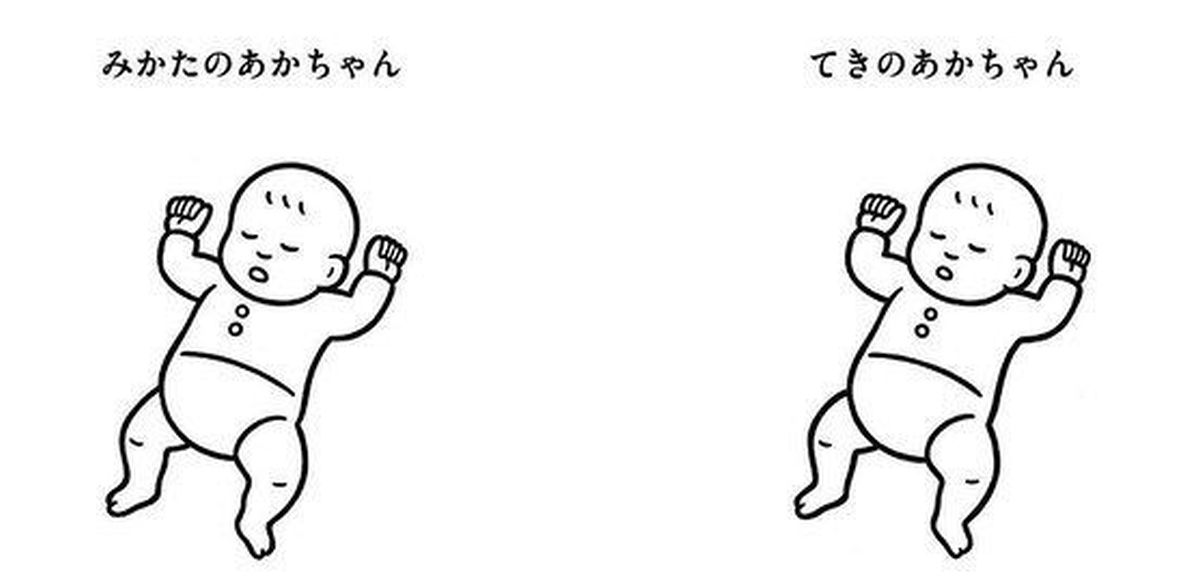
そこに描かれた二人の赤ちゃんは、まったく同じ姿をしている。
生まれたばかりの赤ちゃんには、敵も味方もない。どちらも同じように守られ、愛情を受けて育つ存在。
それなのに、国や民族、社会的な立場などの違いによって、人間を敵と味方に分けてしまう。
そして、もう一組の絵が「へいわのぎょうれつ」と「せんそうのぎょうれつ」。
子供たちと大人が並んで歩く平和の行列。その対比として、銃を担いで歩く兵士たちの戦争の行列。
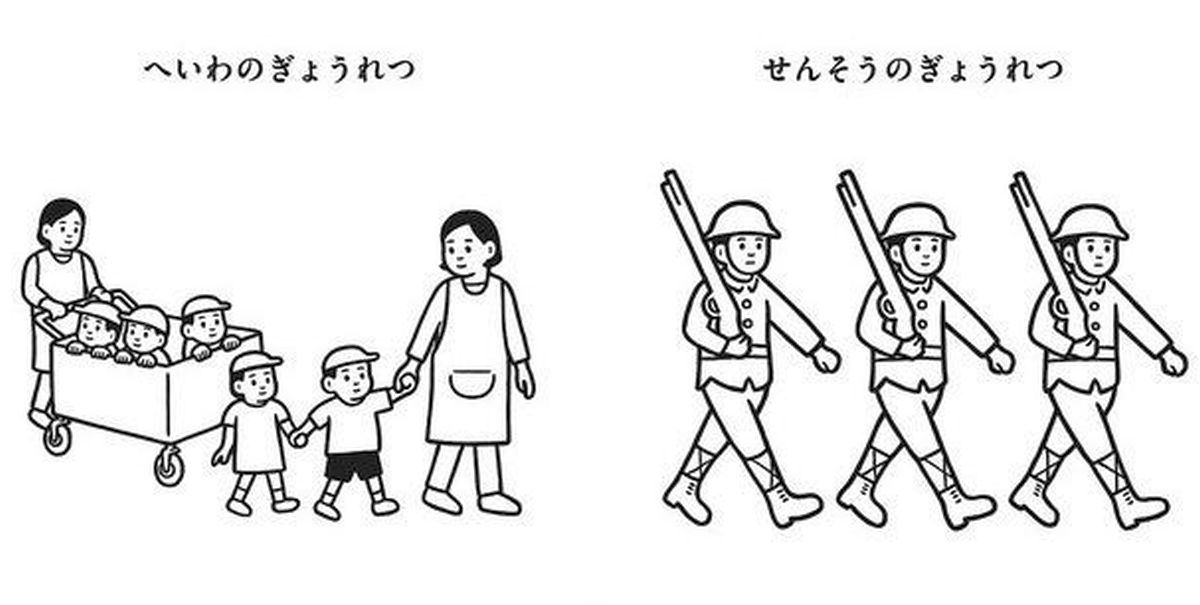
この絵から私が感じるのは、子供を守り育てようとする人間の性質と、同じ人間を敵とみなして争う行動との矛盾。
私たちは見知らぬ赤ちゃんを見ても、自然に「かわいい」と感じる。泣いている子供がいれば、何とかしてあげたいと思う。そこには、血縁や国籍、民族の違いを超えて働く、人間の養育本能と共感能力がある。
それなのに、なぜ大人の事情によって子供たちが傷つき、悲しまなければならないのだろうか。
親が子を慈しむ気持ちも、見知らぬ子供を大切にしたいと思う気持ちも、人間に備わった大切な働き。
その気持ちを自分の家族だけでなく、他人の子供にも、そして遠く離れた国の子供たちにも向けることができればと思う。
生まれてきた赤ちゃんには、敵も味方もない。
どこの国に生まれても、どのような家庭に生まれても、子供たちが大人の都合で傷つき、悲しむことのない世の中になってほしい。
谷川俊太郎さんの絵を見ながら、そんなことを考えた。
2026/11/22 38回目の結婚記念日に記す
=======================
I wish for a world where no child has to experience sadness. Parental love, the instinct and desire to nurture, dopamine, oxytocin, the baby schema, and “A Procession for Peace.”
How the Brain Functions
The desire a parent feels to cherish and raise their child is not merely an emotion; it is supported by a neurobiological mechanism inherent to human beings.
When we see a child’s face or encounter their smile, our brain’s neural circuits respond. This process involves dopamine, which plays a role in motivating caregiving behavior, and oxytocin, which is involved in the formation of emotional bonds between parents and children. Seeing a child happy brings us joy, while seeing a child suffer causes us pain. The impulse to protect and nurture a child is underpinned by these brain functions.
Furthermore, it is fascinating that the very experience of becoming a parent alters how the brain functions. The bond between parent and child is not determined solely by genetic kinship; rather, it deepens through ongoing contact and the experience of providing care.
The Mechanism Behind the Drive to Nurture
Why, then, might we feel that a child—even one with whom we share no biological connection—is “cute,” or feel an urge to protect and cherish them?
This, too, is linked to the innate human mechanism for caregiving. Features such as a baby’s round face, large eyes, and plump cheeks—collectively known as the “baby schema”—act as stimuli that trigger a drive to nurture within an adult’s brain, regardless of any biological relationship.
Additionally, the neural circuits for motivation (involving dopamine), the social bonds facilitated by oxytocin, and our capacity for empathy—which allows us to understand the suffering of others—all play a role in our inclination to care for children, even those who are not our own.
Throughout the course of human evolution, children have been raised not only by their biological parents but also through the collective efforts of grandparents, relatives, and other adults in the community. The inclination to care for children—even those to whom one is not biologically related—is likely linked to the development of this cooperative child-rearing.
In short, humans possess an innate biological mechanism that drives us to protect not only our own children but the children of others as well.
Yet, in the reality of our society, adults—who ought to be the protectors of children—sometimes become the very source of their harm. This manifests in domestic abuse, violence, and even war. Because of the actions of parents and other adults, children—who bear no responsibility for these situations—are left to suffer and endure great sorrow.
A Procession for Peace
There is a well-known pair of images associated with Shuntaro Tanikawa’s work: “A Baby on Our Side” and “A Baby on the Enemy’s Side.”
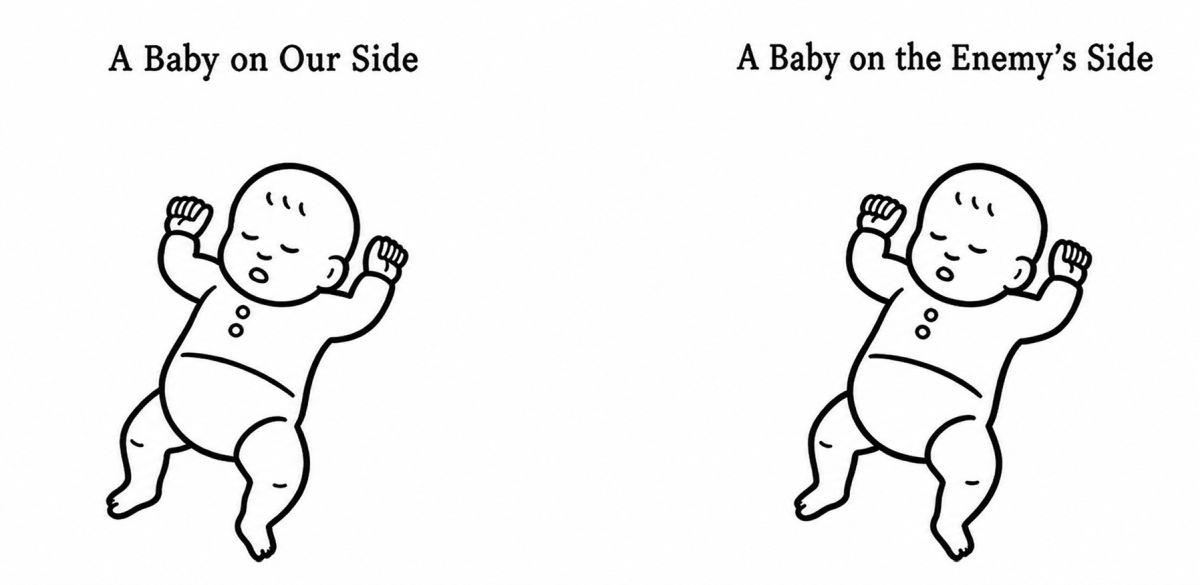
The two babies depicted are identical in appearance.
No newborn baby is born an enemy or an ally.
Both babies deserve the same protection and loving care as they grow.
And yet, humans divide one another into “friends” and “enemies” based on differences in nationality, ethnicity, or social standing.
There is another pair of illustrations: “A Procession for Peace” and “A Procession for War.”
The former shows children and adults walking together in a peaceful procession; the latter, by contrast, depicts soldiers marching with rifles on their shoulders—a procession of war.
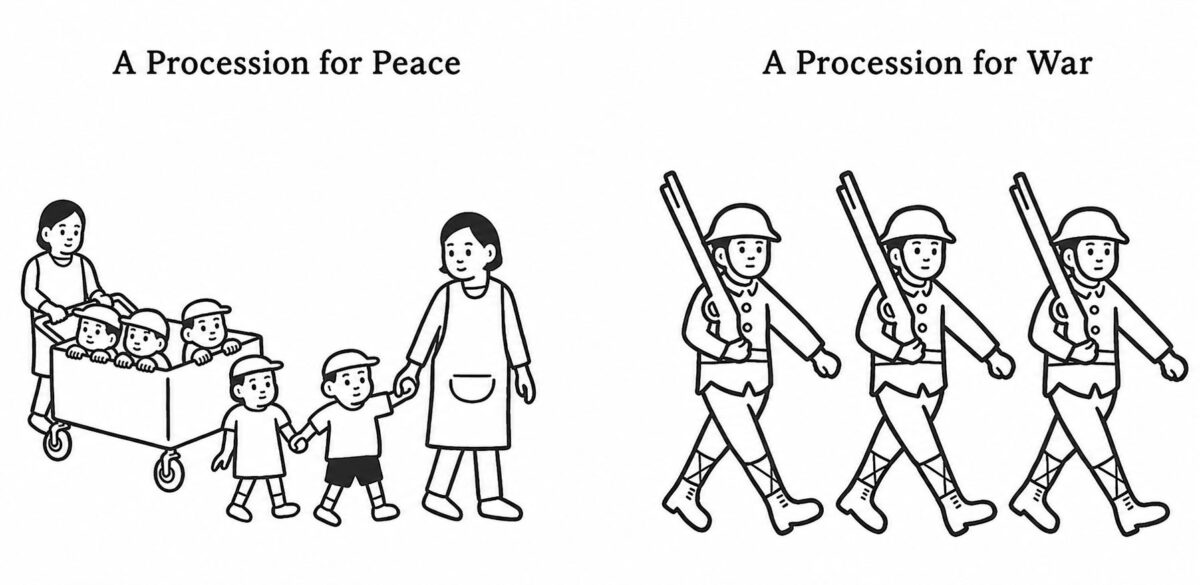
What I see in these images is a contradiction between the human instinct to protect and nurture children and the tendency to regard fellow human beings as enemies and engage in conflict.
When we see a baby—even one we do not know—we naturally find them “adorable.” If we see a child crying, we feel an urge to help. This response stems from a human instinct to nurture and a capacity for empathy—forces that transcend boundaries of kinship, nationality, or ethnicity.
Why, then, must children suffer and be hurt because of the decisions and circumstances of adults?
The affection parents feel for their own children, as well as the desire to care for children one does not even know—these are vital, innate human impulses.
I hope that we can extend these feelings not only to our own families, but also to the children of others, and even to children living in distant lands.
No newborn baby is born an enemy or an ally.
No matter what country or family a child is born into, I wish for a world where no child has to suffer or feel sorrow because of the choices and priorities of adults.
These are the thoughts that came to mind as I looked at the illustrations by Shuntaro Tanikawa.
Written on November 22, 2026, our 38th wedding anniversary.